MOTIVATION

The length of a paper is no longer evidence that the work was done

With the general availability of large language models, the human cost of producing text has fallen to near zero while the enviromental cost is rising exponentially. The cost of producing results that another researcher can reproduce has not.

The ecoCompute conference has demonstrated that a culture of empirical demonstration is workable in practice. What is missing is a peer-reviewed venue that holds research to the same standard: one in which the reviewers execute the artifact.

The scope is resource-aware and resource-reducing computing: energy, carbon, hardware lifetime, memory, bandwidth, and the methods used to measure and account for them.

Three departures from the conventional format

The venue is organised around the artifact rather than around the write-up.

  1. Artifact first

Every submission includes a complete, runnable artifact. An archive file or a container image is sufficient; no hosting platform is required.

Each artifact must be accompanied by a precise, step-by-step guide that enables a reviewer to regenerate the reported results without consulting the authors.

  1. Two-page write-up

The write-up is a guide to the artifact, not the evidence itself. It is limited to two pages and states the claim, the method, the results, the relation to prior work, and the questions the authors wish to discuss.

Bullet points are acceptable throughout. Presentational quality is not a criterion for acceptance.

  1. No presentations

The event consists entirely of discussion, following the session format used at ICT4S.

There are no slide presentations. Each accepted submission is discussed in three separate sessions, with a different group of participants in each.

Energy and carbon measurements are not bit-reproducible. The review process accounts for this explicitly.

Authors state which property of their results is expected to be stable, that is an ordering, a direction or an effect size, and within what tolerance. They report the variance across their own runs rather than a single mean.

A reviewer who reproduces the stated ordering but not the absolute values has reproduced the claim, provided the claim was formulated in those terms.
Artifact requirements
THE EVENT

Online, discussion only, three sessions per submission

Online

The event is held entirely online. There is no venue, and no travel or accommodation is required.

Three sessions per submission

Each accepted submission is allocated three discussion sessions. The author participates in all three.

Registration per session

Participants register for individual sessions in advance. Group size is limited so that every participant is able to contribute.

Reading in advance

The two-page submissions are circulated one week beforehand. Having read them is a condition of participation in a session.

Session notes returned to the author

Notes from each session are produced with LLM assistance, sent to the author, and serve as input to the full paper.

A stage in the process, not a showcase

The event is positioned between the artifact and the publication. Its purpose is to improve the work rather than to present completed results.
PROCESS

Review and publication

  1. 01

    Submission

    Two pages and a complete, runnable artifact.
  2. 02

    Kick-the-tires phase

    The opening days of the review period are reserved for setup. Reviewers report any issue that prevents them from starting, and authors are given a short window in which to correct it. Artifacts should not fail on setup problems.
  3. 03

    Artifact evaluation

    A dedicated artifact evaluation committee executes the submissions. The review outcome and the artifact status are published together with the paper.
  4. 04

    Stage one: presentation

    Accepted two-page submissions are discussed at the event, in three sessions each.
  5. 05

    Stage two: full paper

    Written after the event and shepherded by a committee member, who confirms that the claims do not exceed the evidence that was reviewed. The full paper is published in ECEASST: no fee for authors, no fee for readers.
Read the full process
WHO

Organisers

ecoCompute Science is organised by:
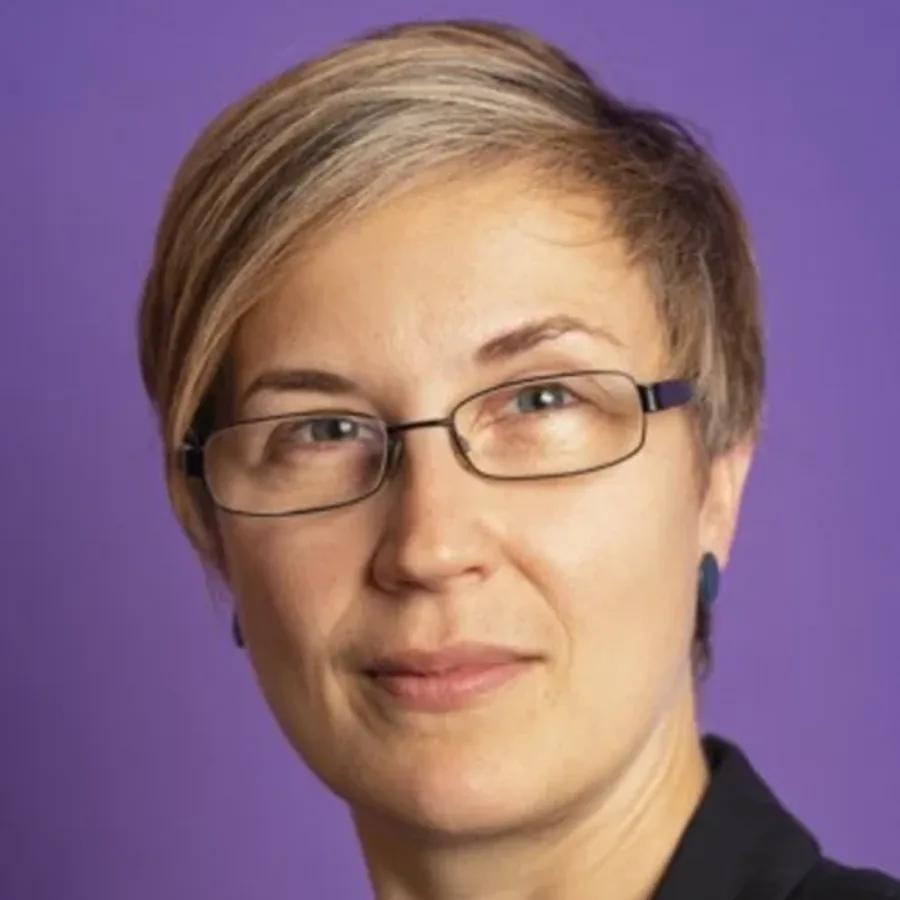
Prof. Dr. Anna-Lena Lamprecht

Prof. Dr. Anna-Lena Lamprecht

Publication track | University of Potsdam

Prof. Dr. Verena Majuntke

Prof. Dr. Verena Majuntke

Programme | HTW Berlin
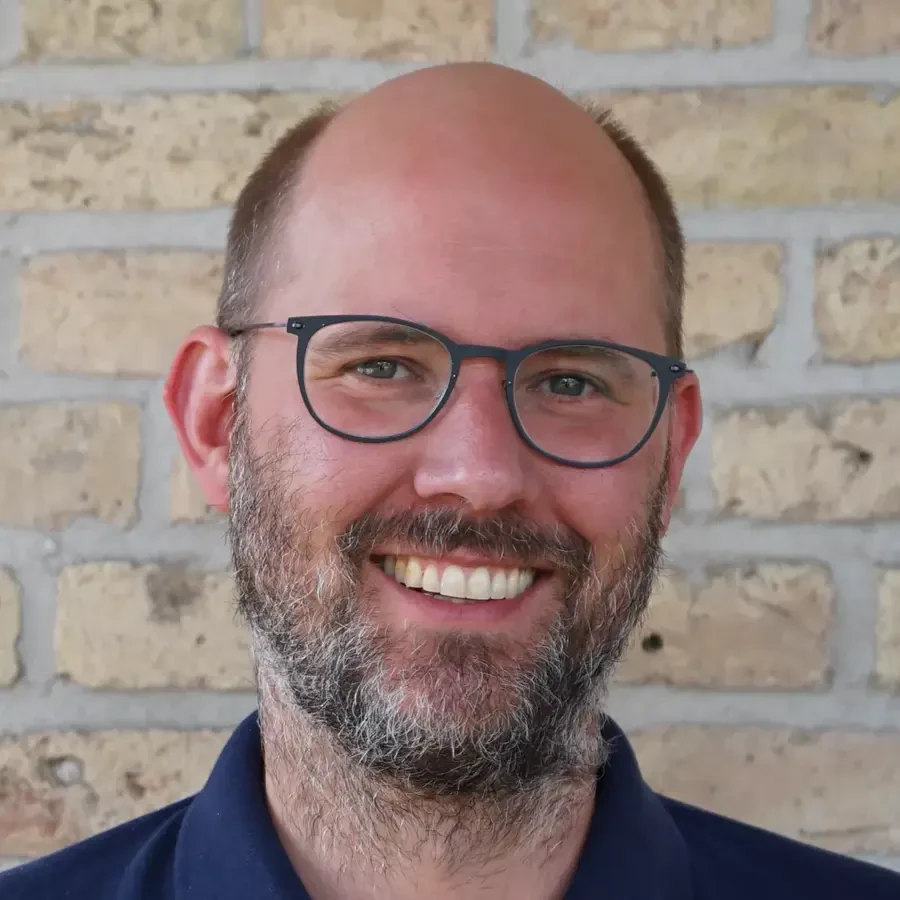
Didi Hoffmann

Didi Hoffmann

Artifacts and infrastructure | Green Coding Solutions

Contributing to this venue

ecoCompute Science is seeking authors, reviewers, and colleagues willing to identify where this format breaks down. Enquiries are welcome.
Contact us

ecoCompute, the conference

ecoCompute Science originates in the ecoCompute conference, held in Munich in 2024 and in Berlin in 2025. Owing to the organisational overhead of a large in-person event, no in-person ecoCompute will be held in 2027. The talks, speakers and schedules of both conferences remain available online.
View the archive